
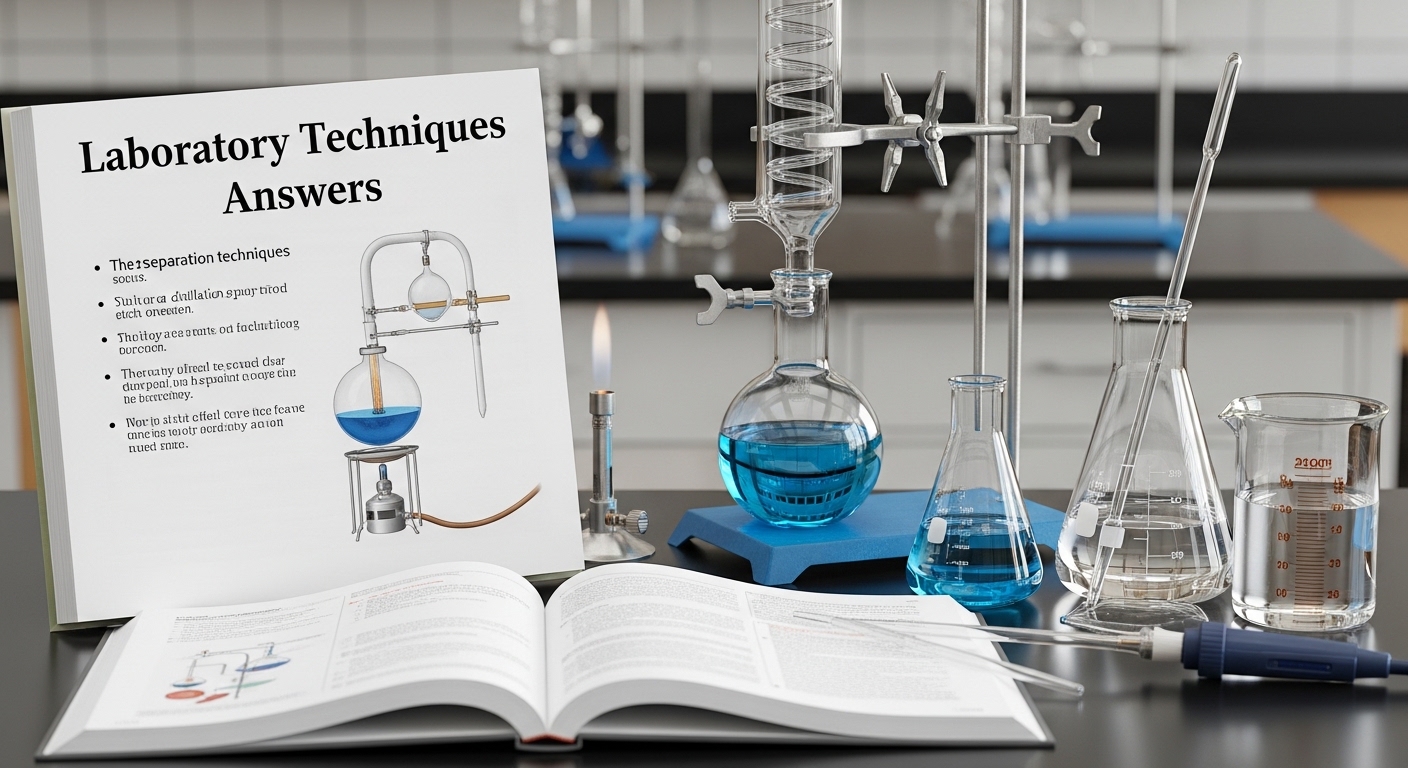
Laboratory assignments can be a thrilling journey into the world of science. They provide hands-on experience with various techniques that are crucial for understanding complex concepts in biology, chemistry, and physics. But let’s face it—navigating laboratory techniques can sometimes feel overwhelming. From mastering equipment to ensuring safety protocols, there’s a lot to keep in mind.
This guide aims to demystify laboratory techniques and help you tackle your assignments with confidence. Whether you’re a student preparing for an exam or simply interested in honing your lab skills, we’ve got you covered! Dive in as we explore essential tools, common methods, and expert tips that will make your next laboratory assignment not just manageable but also enjoyable. Get ready to unlock the secrets behind successful experiments!
Basic Equipment and Safety Measures
Every laboratory needs essential equipment to function effectively. Common items include beakers, pipettes, test tubes, and microscopes. These tools enable accurate measurements and observations for experiments.
Safety measures are equally important in any lab setting. Always wear personal protective equipment (PPE), such as gloves, goggles, and lab coats. This gear protects against spills, splashes, or exposure to hazardous substances.
Proper ventilation is crucial too. Ensure that fume hoods are operational when working with volatile chemicals to minimize inhalation risks.
Familiarize yourself with emergency procedures before starting any experiment. Know the locations of fire extinguishers, first aid kits, and eyewash stations. Being prepared can make all the difference during an unexpected situation.
Keeping your workspace organized contributes to safety as well. A clutter-free area reduces the risk of accidents while allowing you to focus on your work efficiently.
Common Techniques Used in the Laboratory
Laboratories are bustling hubs of discovery, utilizing various techniques to unlock the secrets of science. One common method is titration, which helps determine the concentration of a solution through careful measurement and reaction.
Another widely used technique is chromatography. This method separates mixtures into their individual components, often revealing fascinating insights about chemical compositions.
Microscopy allows scientists to explore the microscopic world. With powerful lenses, they can examine cells and microorganisms that are otherwise invisible to the naked eye.
For biologists, PCR (Polymerase Chain Reaction) amplifies DNA samples. This technique is crucial for genetic research and diagnostics, enabling researchers to study specific genes in detail.
Spectrophotometry measures how much light a substance absorbs at different wavelengths. It’s essential for quantifying concentrations in solutions across various fields. Each technique plays a vital role in advancing our understanding of complex scientific concepts.
Steps for Conducting Experiments
Conducting experiments is a systematic process that demands attention to detail. Start by clearly defining your hypothesis. This statement will guide your entire investigation.
Next, gather all necessary materials and equipment. Ensure everything is ready before you begin. Organizing your workspace can save time and minimize errors.
Once set up, follow the predetermined protocol closely. Consistency is key in obtaining reliable results. Record observations meticulously throughout the experiment; these notes are invaluable for later analysis.
After completing the experiment, clean up properly to maintain safety standards for future work. Review your data carefully, looking for patterns or anomalies that could inform your conclusions.
Always remember to repeat critical steps if needed—replication strengthens validity in scientific inquiry. The path of experimentation may be intricate but offers rich findings when approached methodically.
Data Analysis and Interpretation
Data analysis is a critical aspect of any laboratory assignment. It transforms raw data into meaningful insights. This process begins with organizing your results, often in tables or graphs for clarity.
Statistical tools play an essential role here. They help identify trends and patterns that might not be immediately apparent. Software programs can streamline this task, allowing for more complex analyses to be conducted efficiently.
Interpreting the data requires a keen understanding of the experiment’s context. Ask questions like: What do these numbers reveal? Are there anomalies worth investigating further?
It’s also vital to consider potential sources of error during interpretation. Each step can influence outcomes significantly, leading to misleading conclusions if overlooked.
The goal is to draw informed conclusions that contribute positively to scientific knowledge and future experiments. Clear communication of findings ensures they reach the intended audience effectively.
Troubleshooting Common Lab Issues
Troubleshooting common lab issues can feel daunting, but a systematic approach makes it manageable. Start by checking your equipment. Ensure everything is calibrated correctly and functioning.
Next, observe your samples closely. Sometimes, unexpected results stem from sample contamination or improper handling. Always follow proper protocols to minimize these risks.
If you encounter anomalies in data, revisit your methods. Were the right controls used? Did you adhere to all procedures?
Team discussions often help clarify problems too. Engaging with peers might reveal insights that lead to solutions quickly.
Don’t forget documentation; keeping detailed records can help track down recurring issues over time. Regularly review notes for patterns that could indicate underlying problems.
Embracing a proactive mindset helps foster an adaptive laboratory environment where challenges are met with curiosity rather than frustration.
Conclusion and Further Resources
Mastering laboratory techniques is essential for anyone engaged in scientific research or education. These methods not only enhance the quality of your experiments but also ensure safety and reliability in data collection.
For further learning, consider diving into reliable resources such as textbooks on laboratory practices, online courses, and university guidelines. Websites like Khan Academy and Coursera offer excellent materials that can aid your understanding. Joining forums or study groups can also provide valuable insights from peers facing similar challenges.
Don’t hesitate to reach out to educators or experienced lab professionals for guidance. The world of science is vast, and every step taken toward improving your skills is beneficial for future endeavors in the laboratory setting. Your journey through various lab techniques will deepen your understanding of scientific principles while preparing you for more complex tasks ahead.
 Alexander Hayes